
American workwear wasn't born in a fashion studio: it's the work clothing of late-19th-century American railroad workers and farmers — Carhartt in 1889, Dickies in 1922 — that hip-hop and skate picked up a century later, turning it into a pillar of global streetwear. At ShopTonOutfit, vintage Carhartt and Dickies are among the pieces we get asked for the most, right alongside baggy and raw denim. So rather than sell a piece without telling its story, we're going to walk you through the real dates — the ones that explain why a fabric built for a job site is still going strong on the sidewalk today.
Carhartt: how did it all start in Detroit in 1889?
Hamilton Carhartt launched his brand in Detroit in 1889, with two sewing machines and a half-horsepower electric motor. His duck canvas overalls were designed after directly interviewing railroad workers about their real job-site needs. Success came fast: by 1910, Carhartt had factories in five American cities, plus operations in Canada, England and France.
"Honest value for an honest dollar."
Hamilton Carhartt's founding motto, 1889
Why duck canvas, and not some other fabric?
The word "duck" comes from the Dutch doek, a linen canvas originally used for ship sails and tents. In the 19th century, American miners and railroad workers adopted it for its toughness: it holds up against sparks, sharp tools and bad weather without tearing. Hamilton Carhartt chose this brown canvas as early as 1889 — the first press mention of his "wonderful brown Carhartt's" dates back to 1915.
The chore coat and the Detroit Jacket, two pieces never redesigned?
The chore coat took on, as early as 1917, the features we still know it for today — corduroy collar, triple stitching, pockets reinforced with copper rivets — before moving from an original blue denim version (1923) to brown duck canvas. The Detroit Jacket came later: launched in 1954 in a zipped "Eisenhower" style, it swapped denim for 12oz duck canvas as early as 1955. Two pieces designed for job sites, virtually unchanged for nearly a century.
Dickies, Carhartt's Texan "cousin" born in 1922?
In 1922 in Fort Worth, Texas, cousins C.N. Williamson and E.E. "Colonel" Dickie bought an overalls factory and renamed it Williamson-Dickie Manufacturing Co. Same DNA as Carhartt: tough canvas, roomy cuts, honest prices, made for farmers and workers across the American Southwest — before becoming a global workwear reference.
The 874, the most copied piece in workwear?
The 874 pant launched in April 1967: a 65% cotton / 35% polyester blend with a stain-resistant finish, designed to hold up through a full workday without wrinkling. Decades later, it would become one of the most copied pants in the streetwear wardrobe.
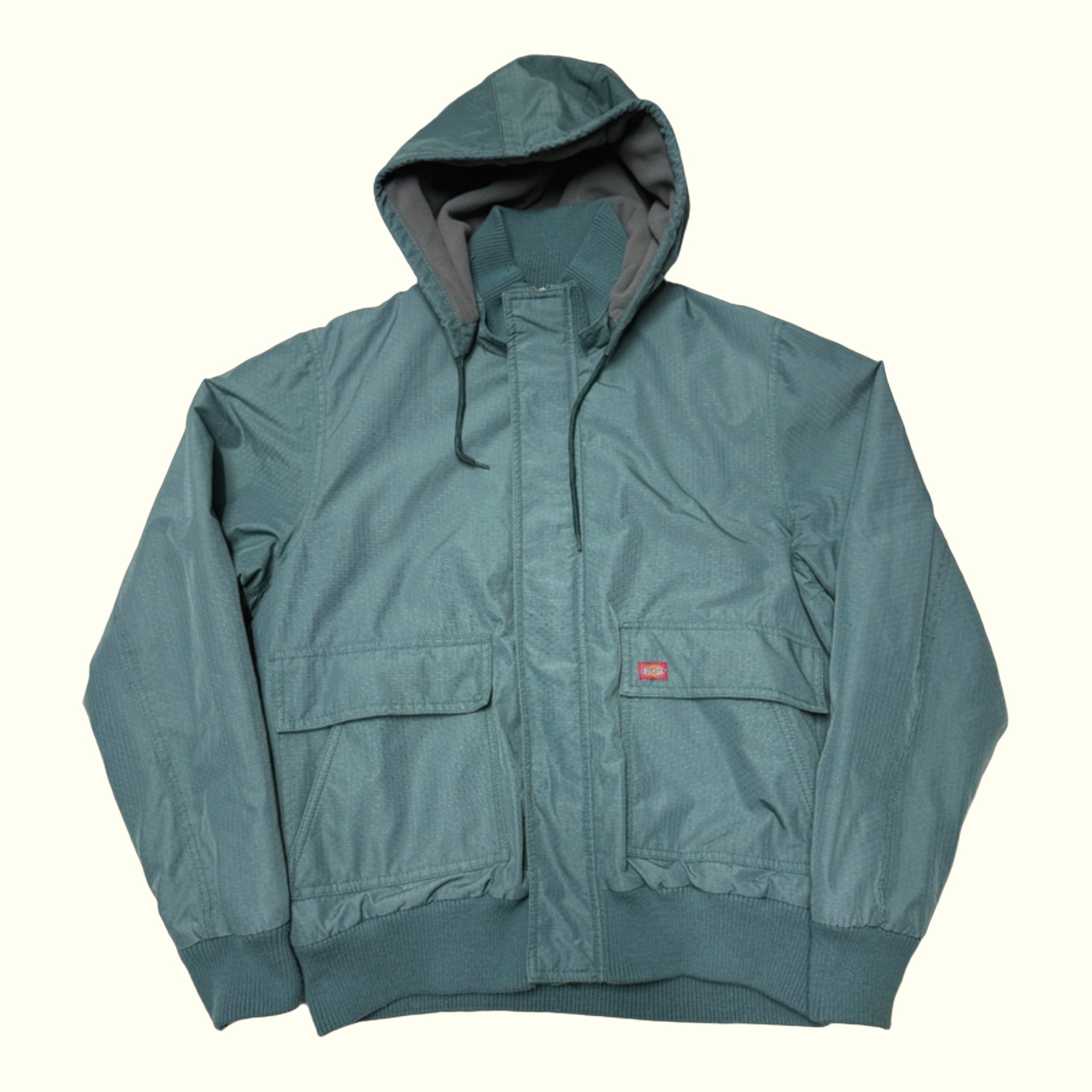
At ShopTonOutfit, vintage Dickies stock moves fast — a teal blue Dickies work jacket in very good condition (7/10) or a W38/L32 khaki Dickies chino have passed through the shop. No dedicated Dickies collection on the site for now (the stock turns over faster than Carhartt) — it's more on our shop that you'll want to keep an eye out for new arrivals, or in our article cult vintage workwear pieces for the models worth spotting (Carhartt, Dickies, Ben Davis). And if you're still torn between Carhartt, Dickies, Levi's or Wrangler for your next purchase, our guide which vintage jean brand to choose compares all four.
How did job-site clothing become a streetwear uniform?
As early as the 1980s, New York and California rappers adopted Carhartt and Dickies for their toughness and no-frills look. The following decade made the movement mainstream: 2Pac, Nas and the Beastie Boys popularized oversized Carhartt workwear as a full look, while Snoop Dogg and Cypress Hill turned the Dickies 874 into a West Coast wardrobe classic. Around the same time, skaters like Julien Stranger and the Antihero and Toy Machine teams adopted that same 874 for how well it held up on the board — not originally for style, just because it could take a fall.
It's no accident these two worlds meet in the same wardrobe: hip-hop and skate are both looking for loose clothing that can handle movement and last. The resulting loose cut has its own history — if the topic interests you, we covered it in our article on the history of the baggy jean.
One useful clarification: the Carhartt you find in European fashion boutiques is called Carhartt WIP (for "Work In Progress"). This line was created in 1994 by Swiss entrepreneur Edwin Faeh, under license, designed for fashion and skate — distinct from the American workwear line sold in hardware stores, even though the "C" logo is shared between the two.
Why does workwear stay a cult favorite at ShopTonOutfit today?
With us, vintage workwear — Carhartt and Dickies leading the way — is one of the three categories that sells fastest, alongside baggy and raw denim. The question we hear most in the shop: "do you have any Carhartt?" A canvas designed to last decades on a job site holds up just as well through several lives secondhand.
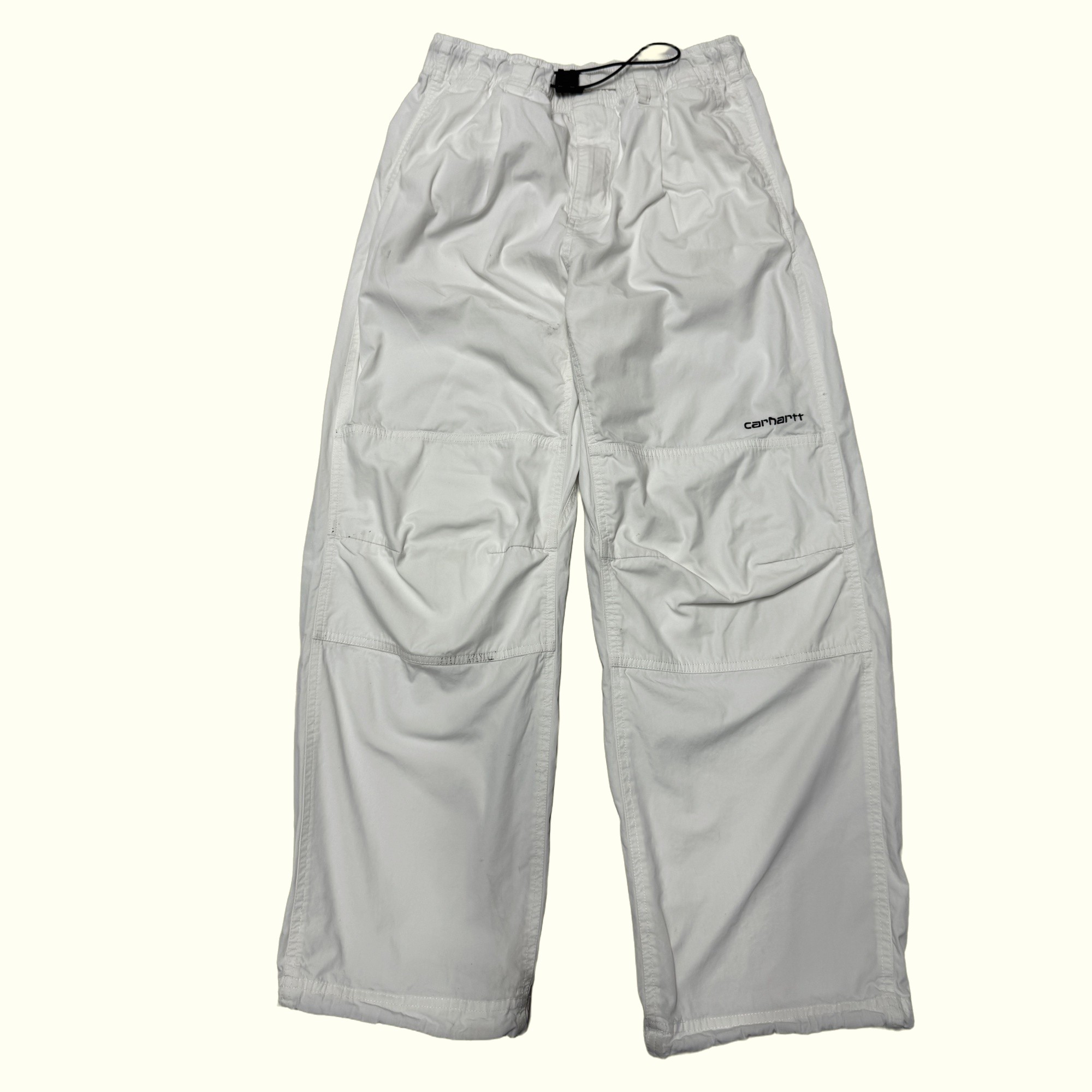
Our Carhartt collection now counts nearly 99 vintage pieces, checked and measured by hand — from loose double-knee pants like this Carhartt Large W29/L27 (good condition, €53.90) to work jackets. For a full rundown of the most sought-after pieces of this kind, our article cult workwear pieces breaks down what drives the value of a vintage Carhartt or Dickies. And to learn everything about buying, dating and styling a vintage jean in general, head to our complete guide.
FAQ
What's the difference between Carhartt workwear and Carhartt WIP?
Carhartt workwear is the original American line, sold since 1889 for job sites. Carhartt WIP is a European license created in 1994, designed for fashion and skate — same logo, but different distribution and wardrobe.
Why were Carhartt overalls originally brown?
The color comes from "brown duck" canvas, chosen for its resistance to sparks, tools and bad weather on late-19th-century railroad job sites.
Is the Dickies 874 pant still made the same way as in 1967?
The cotton/polyester blend and the original cut remain the foundation of the model, even though Dickies has since expanded the range with other cuts and materials.
How do you recognize an authentic vintage Carhartt or Dickies?
Labels, finishes and certain cut details change from decade to decade. We break down the markers to check in our article how to recognize a real vintage Carhartt (or Levi's) from a fake.
Written by the ShopTonOutfit team.