
A vintage jean should be washed rarely, always inside out, in cold water, and should never see the inside of a dryer. Simple on paper — but between the myths floating around (the freezer trick, vinegar that supposedly "sets" the color) and the real questions you have about a piece that's already 20, 30 or 40 years old, it's easy to get confused. We've sorted out what's documented from what's just legend, and we'll show you exactly how we do it ourselves, jean after jean.
How often should you really wash a vintage jean?
A jean, vintage or not, needs washing far less often than you'd think: most denim brands recommend waiting between 4 and 10 wears before a full wash, barring a visible stain or a stubborn smell. On an already-old piece, that spacing matters twice as much — every trip through the machine puts a bit more strain on a fiber that already has 20 or 40 years of life behind it.
Between washes, air it out rather than rewashing it: hung outside or near an open window, a jean loses most everyday odors within 24 to 48 hours. A little baking soda sprinkled on overnight and brushed off the next day handles the rest on lighter smells.
Machine or hand wash: which method for an already-old jean?
Delicate cycle, cold water, jean inside out, mild detergent, alone or with similarly dark colors: that's the baseline everyone agrees on, vintage or not. On a truly old or fragile piece, hand washing stays safer than a machine even on delicate cycle — less friction, less risk of weakening a seam or a fabric already worn down by time.
This is exactly what we apply on our end before every sale: cold machine wash, piece inside out, never a dryer. Not a marketing trick — it's the most basic method there is, and that's exactly why it works: the less you rough up the denim, the longer it lasts.
- Turn the jean inside out before putting it in the machine
- Cold water, delicate cycle (30°C max) or hand wash
- Mild detergent, no fabric softener (softener clogs the fibers and dulls the color over time)
- Jean alone or with similar dark colors, never with white
- Zip and buttons fastened to limit friction in the drum
Why should you ban the dryer for a vintage jean?
Dryer heat is public enemy number one for a vintage jean: it speeds up shrinkage, weakens cotton fibers and damages the elastane in jeans that contain it. Comparisons between machine drying and air drying show noticeably more shrinkage from the very first dryer cycle — not to mention fading, which speeds up with every pass.
The right move: air dry, flat or on a hanger, in the shade. Direct full sun fades an already-worn denim even faster than a new one — the dye having already lost some of its density over the years and previous washes.
How do you remove a stain without putting the jean through the machine?
A fresh stain gets treated locally, without waiting for the next full wash: cold water and a baking soda paste handle most organic stains (food, mud, grass), rubbed gently with a soft brush or an old toothbrush. Avoid bleach, which attacks the dye directly, and be careful on raw denim, where localized water can leave a lighter ring once dry.
- Remove any excess (crumbs, dried mud) first
- Apply a baking soda and cold water paste directly to the stain
- Rub gently, without going over the same spot too much
- Rinse with cold water and let it air dry
What should you do and avoid when washing a vintage jean?
| Step | Do | Avoid |
|---|---|---|
| Washing | Cold cycle, inside out, mild detergent | Hot water, intensive cycle, with white items |
| Drying | Air dry, flat or on a hanger, in the shade | Dryer, direct full sun |
| Stains | Spot treatment (baking soda + cold water) | Bleach, aggressive scrubbing |
| Odor | Airing out, baking soda sprinkle | Freezer (cleans nothing, see below) |
Vinegar or salt to set the color: fact or myth?
It's probably the most repeated tip in raw denim: soaking your jean in a white vinegar bath (sometimes with salt) before the first wash, to "set" the indigo and limit fading. Problem is: the denim community itself is split on this, and we'd rather tell you that than settle it without solid proof. On one side, some argue the acid in vinegar helps anchor the dye into the fiber and softens the fabric. On the other, denim care specialists make the opposite argument: indigo and cotton are sensitive to acidity, and a vinegar bath could actually weaken the fiber over time and speed up color loss rather than slow it down.
Bottom line, there's no clear consensus either way as of today. If you want to try it, do it on a piece you're okay risking — not the one you care about most.
Is the freezer an actual cleaning technique?
No — putting your jean in the freezer to "clean" it without washing is a myth that's been thoroughly debunked. Cold slows down the reproduction of odor-causing bacteria, but doesn't kill them, and definitely doesn't remove the molecules already locked into the fiber by sweat. The moment the jean comes back to room temperature, so does the smell.
This myth probably comes from the raw denim community, which tries to avoid washing its jeans to preserve the fades. The intent makes sense — but to actually clean a denim, there's no shortcut: water and a bit of detergent remain the only real tool.
How do you spot and repair the first signs of wear (inseam, hem)?
The inseam is the first area to thin out on a regularly worn jean, due to repeated friction between the thighs. As soon as the fabric starts to whiten or lighten there, a reinforcement or patch sewn in from the inside — before the hole actually appears — avoids a heavier, and often more visible, repair once the tear shows up.
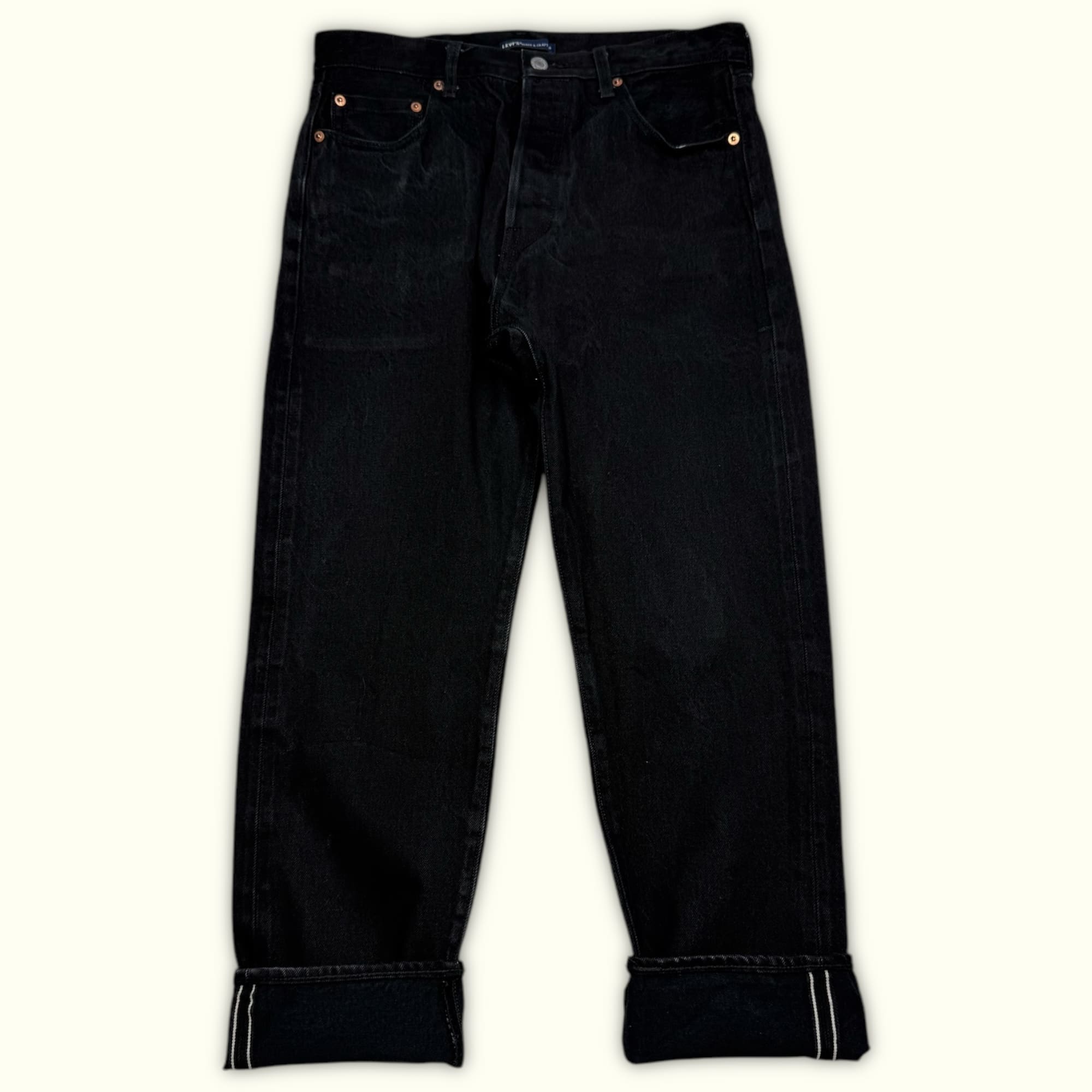
On a piece like this 1980s Levi's 501 W34/L32, rated 7/10, very good condition, which we had in the shop, this kind of upkeep is anything but theoretical: a jean that makes it 40 years without ending up in the trash is the cumulative result of spaced-out washes, constant air drying, and a few targeted repairs rather than a new jean at every snag. For the original hem (the famous chainstitch), it's better to have it taken up by a tailor than cut with scissors: once the original hem is gone, there's no getting it back.
The questions we get asked most about caring for a vintage jean
Do you really need to wash a vintage jean inside out?
Yes: it protects the exposed surface of the fabric — and so the color — from direct friction in the drum and contact with the detergent.
Can you put a vintage jean in the dryer, even on a delicate cycle?
Better to avoid it: even at low heat, the temperature speeds up shrinkage and damages the fibers. Air drying, flat or on a hanger, just takes a bit longer.
Does the freezer let you clean a jean without washing it?
No: cold stops odor-causing bacteria from multiplying but doesn't eliminate them. Only water and soap actually clean a jean.
How often should you wash a vintage jean?
Between 4 and 10 wears depending on the brand and how you wear it, barring a stain or strong odor. In between, air it out rather than rewashing.
How do you remove a stain from a jean without fading it?
Spot treatment (cold water + baking soda), rubbed gently with a soft brush, then air dried — never using bleach.
A well cared for vintage jean is a piece that lasts decades rather than a season — that's the whole argument we make in our article on the charm of the vintage soul. If you want to know everything about choosing, dating and wearing a vintage jean before you even think about care, head to our complete guide. And if yours is really too far gone to save, we always have pieces already selected and ready to wear on the shop.
Written by the ShopTonOutfit team, who's been washing, drying and repairing our own pieces since 2021 before putting them back up for sale.